On-Street Bikeways and Shared-Use Paths (Trails) Network
The City of Jacksonville's bicycle and pedestrian networks are continually expanding, enabling residents to connect to jobs, retail centers, health facilities, and other destinations by bike, foot, wheelchair, or other nonmotorized mode of travel. As these networks grow in mileage and connectivity, it is the city’s aim to ensure that the facilities are designed/constructed to be safe, comfortable, and to serve residents and visitors of all ages and abilities.
In total, the City’s on-street bikeways and trails network comprises 635 miles of existing bike lanes, buffered bike lanes, protected bike lanes, shared lanes, and shared-use paths (sometimes referred to as "trails"). Existing shared-use paths comprise 76 miles of the network, with 361 miles of additional funded or planned trails in the works.
The City of Jacksonville now has an online, interactive map, displaying all the existing, funded, and planned on-street and trails network facilities. Each of the layers can be toggled on/off by using the layers tool on the left-side toolbar. Also, zoom in/out with your scroll wheel or "+/-" icons to get a better view of facilities in your area, print sections of interest using the print icon in the upper right corner, view/download the attributes for all or some of the facilities by opening the attributes tab at the bottom of the map, and more!
Interactive On-Street and Bikeways Interactive Map
For updates, corrections, questions or comments, please contact: JPDTransportation@coj.net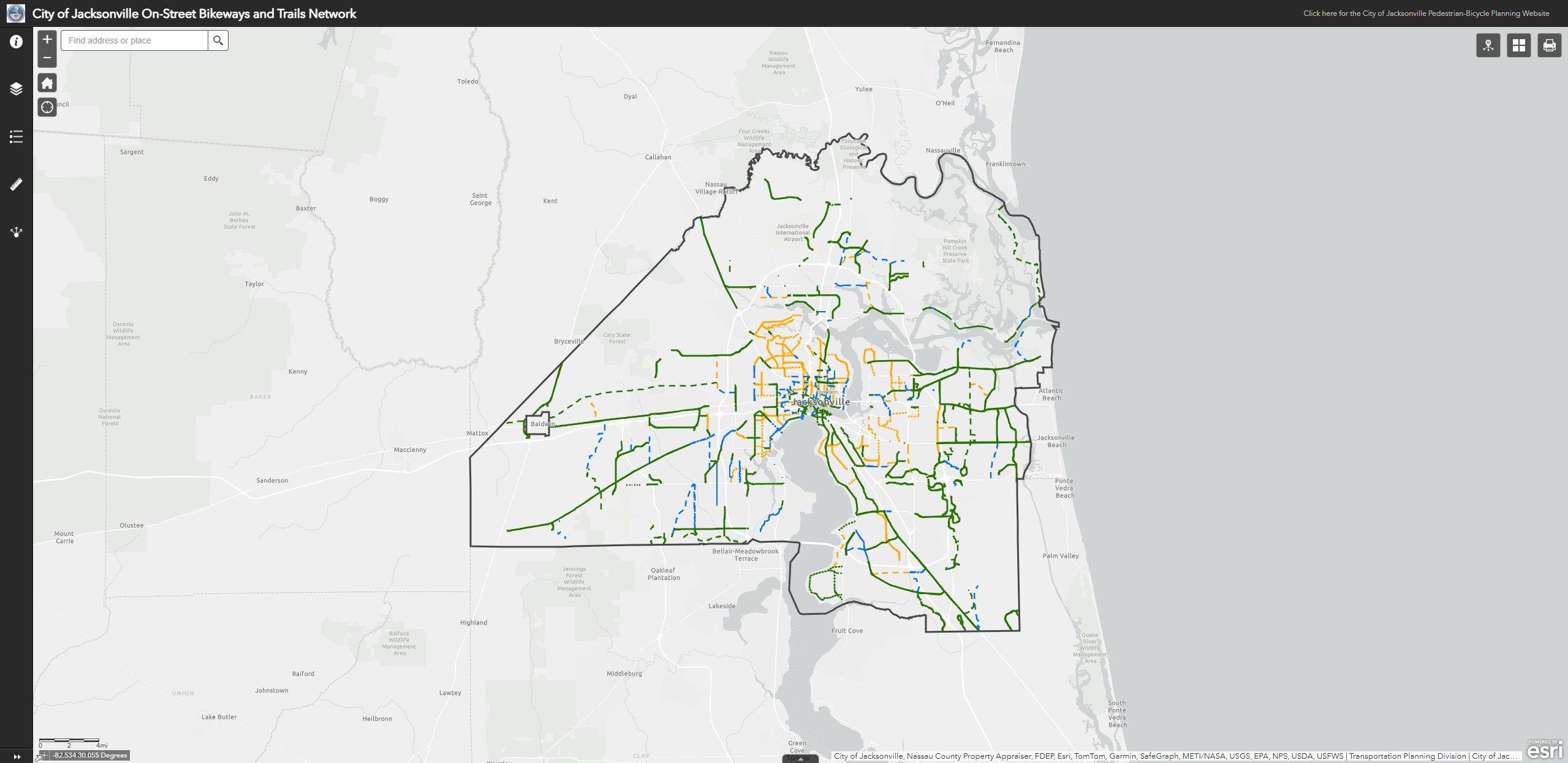
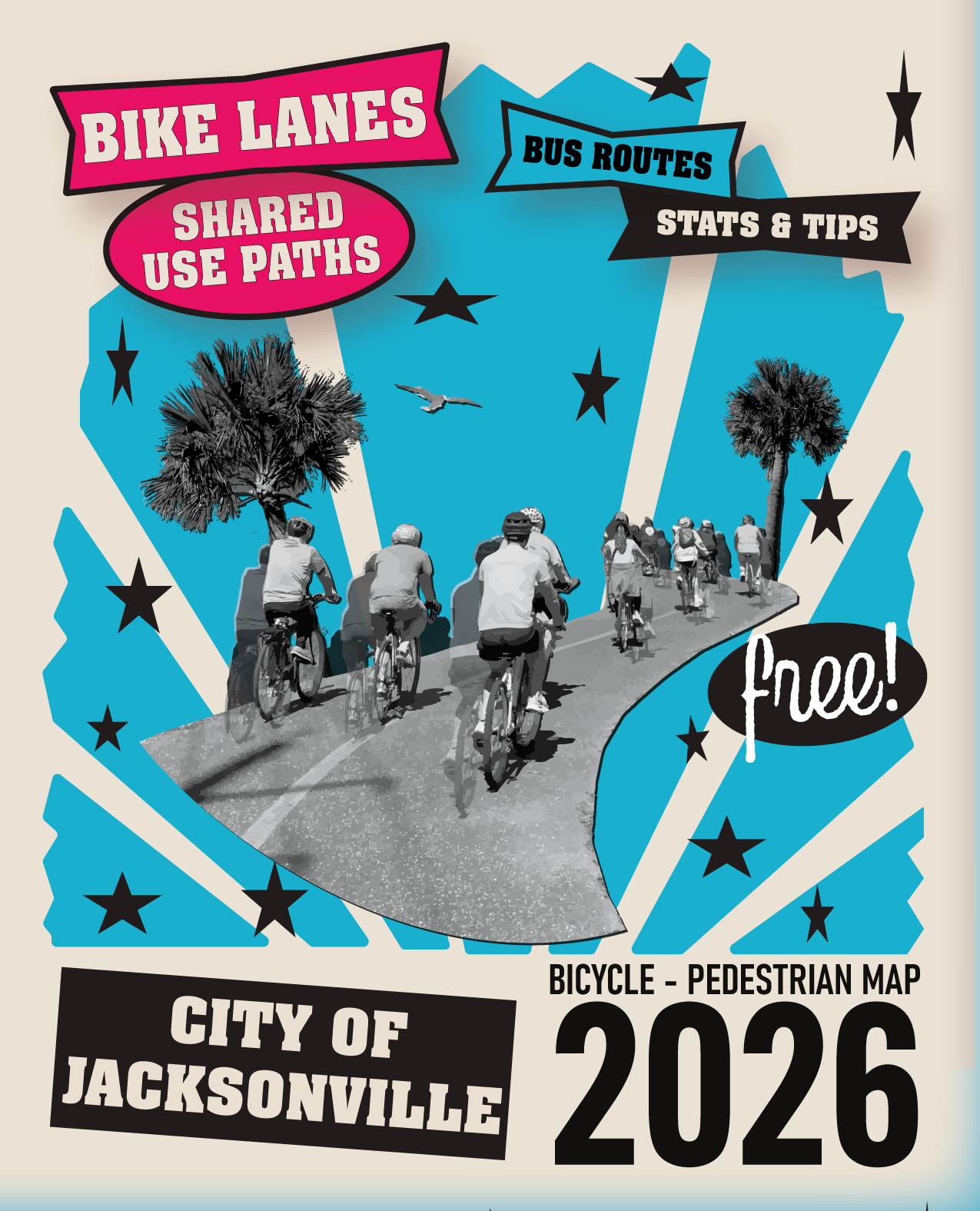
Printable 2026 City of Jacksonville Bicycle/Pedestrian Map (opens PDF document)
Definitions of the various bicycle facility types:
Not sure what the different types of facilities on the COJ map are? The definitions below will help!
- A SHARED LANE is a roadway lane that is open to both bicycle and motor vehicle travel. They'll sometimes have "Sharrow" markings.
- A BICYCLE LANE or BIKE LANE is a portion of roadway that has been designated for preferential or exclusive use by bicyclists by pavement markings. It is intended for one-way travel, usually in the same direction as the adjacent vehicle traffic lane.
- A BUFFERED BIKE LANE is a conventional bike lane paired with an additional, designated "buffer" space separating the bike lane from the adjacent vehicle travel or parking lane. For COJ inventory, these facilities have paint buffers only, and do not offer physical protection from vehicle traffic.
- A PROTECTED BIKE LANE has some sort of physical, stationary, vertical separation between motor vehicle traffic and the bike lane. Examples of vertical separation include plastic posts or "flex posts," bollards, curbs, movable planters, raised mountable bumps, or parked cars (within a designated vehicle parking lane).
- A SHARED-USE PATH (SUP) or "TRAIL" is a paved bikeway, physically separated from motor vehicle traffic by an open space, barrier, or curb. It is either within the highway right-of-way, or within its own independent right-of-way. Shared-use paths may also be used by pedestrians, skaters, wheelchair users, joggers, and other nonmotorized users. Most shared-use paths are designed for 2-way travel. There is no standard width for shared-use paths, but generally, the minimum desirable width for a two-way shared-use path is no less than 10 feet wide.
- A RECREATIONAL PATH is a paved bikeway physically separated from motor vehicle traffic in the same way as a shared-use path, and may also accommodate many different types of nonmotorized users. However, a recreational path does not meet the SUP minimum width of 10 feet, and is generally a meandering nature path entirely contained within a public recreation area (as opposed to a shared-use path which usually connects to other public roadways and points of interest).
Meet the Trails Video Series
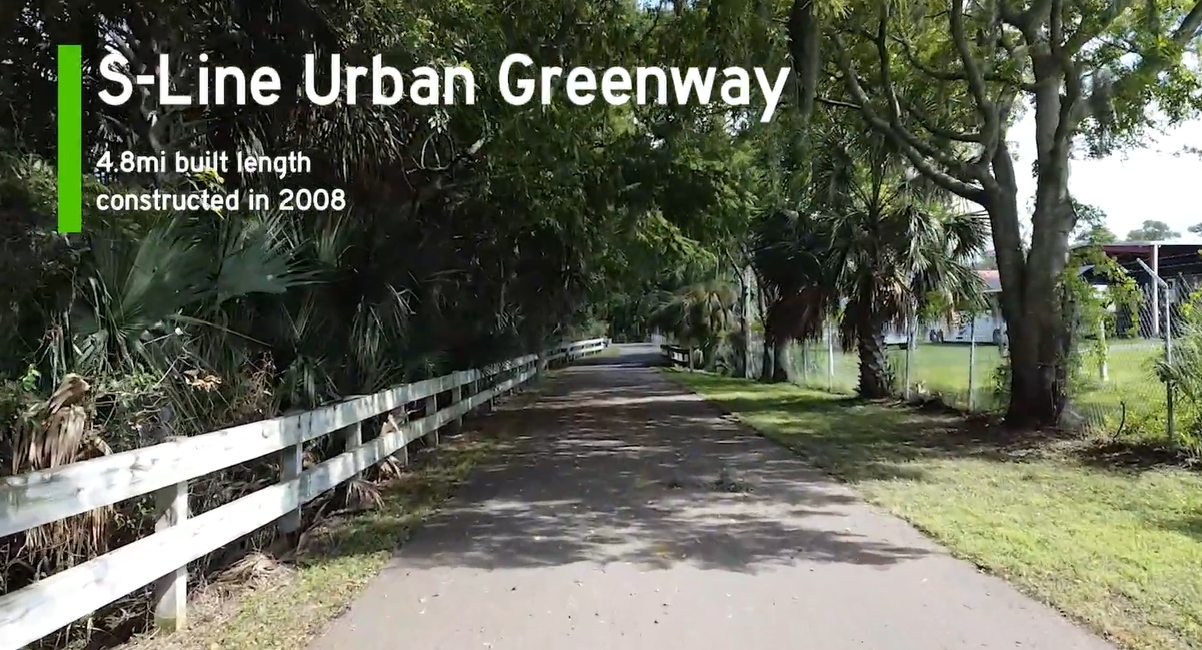
Jacksonville is home to more than 76 miles of shared-use paths, also known as trails, that connect residents and visitors to neighborhoods, parks, destinations, and outdoor recreation opportunities throughout the city. Through the Meet the Trails video series, the Transportation Planning Division will highlight trails across Jacksonville and provide an inside look at the features, amenities, and unique experiences each trail has to offer. The series begins with the S-Line Urban Greenway video linked below.
Have a trail you'd like to see featured next? Let us know at JPDTransportation@coj.net