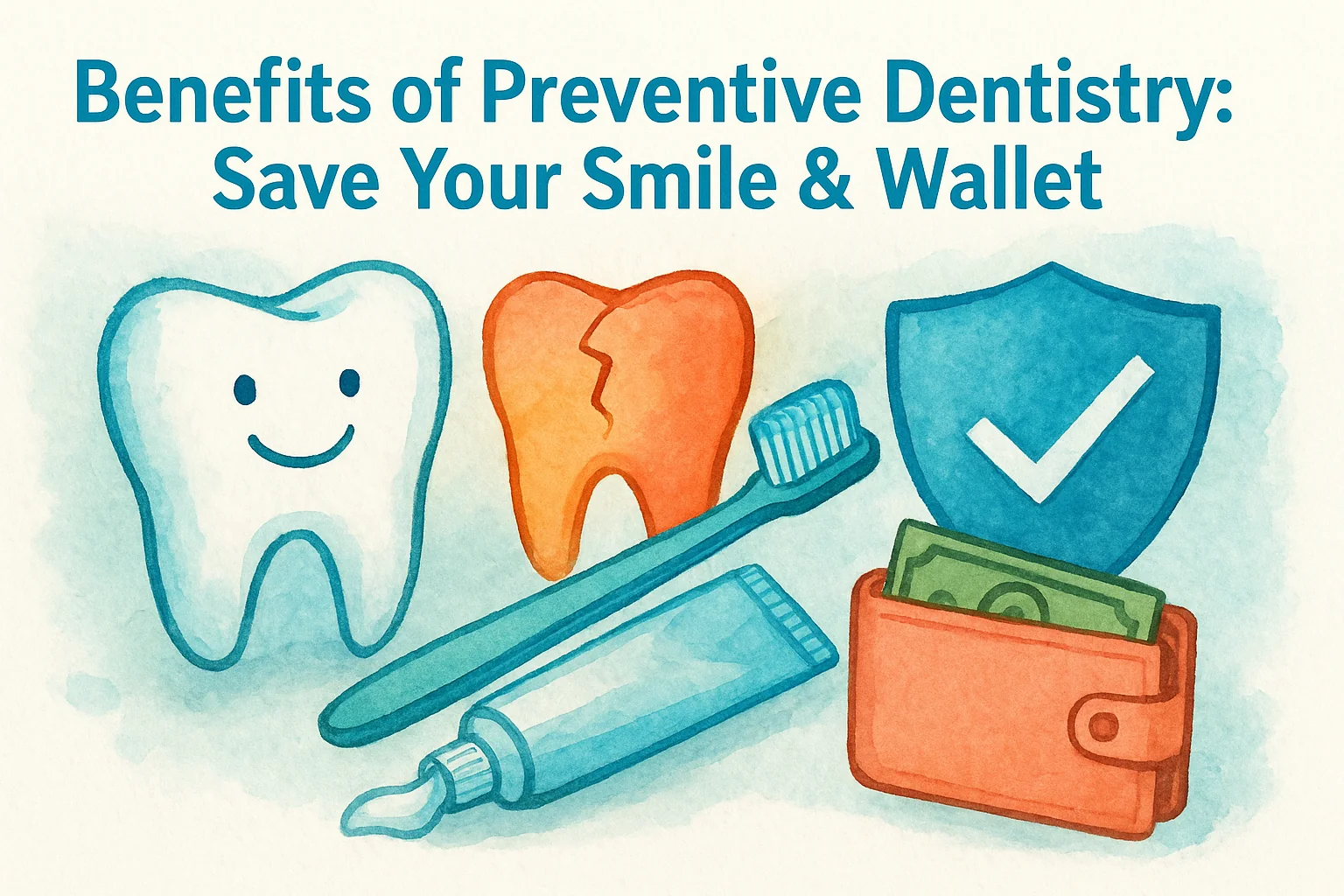
The power of preventative dental care
One of the biggest misconceptions in healthcare is simple: if it doesn't hurt, it's not a problem. When it comes to oral health, that assumption can be misleading - and sometimes costly. Dentists see this all the time. Patients go in feeling fine, expecting a routine visit, and are surprised when they find early signs of gum disease, inflammation, or decay. Nothing hurts yet -but problems are already developing.
Many oral diseases develop quietly. By the time something becomes painful, it has often been progressing for monthsor even years.
When left untreated, these issues don't stay small. In many cases, they escalate to the point where people seek care in urgent or emergency settings -often for conditions that could have been prevented or managed much earlier through routine dental care. When these situations occur, they are not only stressful, but also far more expensive than preventive care. A simple filling or early gum treatment is significantly less costly-in both time and money-than procedures like root canals, extractions, or emergency interventions.
The good news is that when these issues are caught early, they're usually easier to manage. Early treatments are relatively quick and simple while advanced disease requires more complex, time-consuming, and costly care.
There's also a bigger picture to consider. Oral health doesn't exist in isolation. The inflammation we see in the mouth is linked to conditions like diabetes, heart disease, and even pregnancy outcomes.
For example, treating gum inflammation during pregnancy can reduce the risk of a baby being born preterm by 50%. That connection is the foundation of efforts like Oral Health for Overall Health -helping people understand that taking care of their mouths is part of taking care of their whole body.
This is where preventive care really matters. Routine dental visits aren't just about clean teeth -they're about protecting your health and catching what you can't see or feel yet. They give your dentist
a chance to spot early changes, address issues while they're still manageable, and help you avoid bigger problems down the road. If you have dental benefits, these visits are often already covered making preventive care one of the most accessible and valuable steps you can take for your health.
Two visits a year may not seem like much, but they can make a meaningful difference. Because when it comes to your health, pain shouldn't be the first signal that something needs attention.
Resources: cdc.gov; healio.com; niddk.nih.gov